Gated Storage vs. Non-Gated Storage: Perception vs. Reality
Does a Gate Really Make a Storage Facility More Secure?
When prospective customers evaluate a self-storage facility, one of the first questions they often ask is, “Is the property gated?” For many renters, a gate immediately signals security. It creates the perception that access is controlled, tenants are protected, and their belongings are safer than they would be at a non-gated facility. As a result, many facility owners assume that adding a gate is essential to attracting customers and reducing risk. The reality, however, is more nuanced.
#SelfStorage #PaymentProcessing #MerchantServices #StorageSoftware
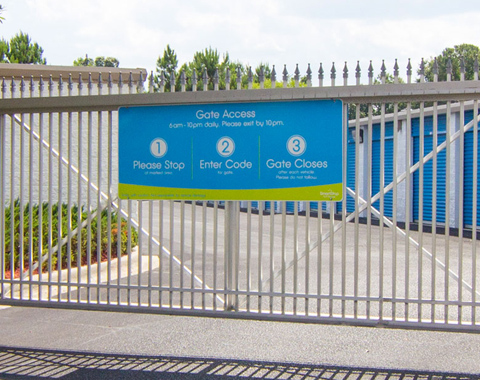 While gated access can be an important component of a facility’s security strategy, a gate alone does not guarantee security. In fact, many operators discover that customer perception and actual risk management are two very different things. Understanding the difference can help storage owners make smarter investments while creating a better experience for their tenants.
Why Customers Prefer Gated Facilities
Security concerns are one of the primary reasons customers choose one storage facility over another. Most tenants are storing valuable belongings, family heirlooms, business inventory, vehicles, or equipment they cannot afford to lose. A gate provides a visible layer of protection that customers can easily understand. When a renter enters a unique access code and sees a secured perimeter, they feel more confident that unauthorized individuals will not have unrestricted access to the property.
From a marketing perspective, gated access is often viewed as a premium feature. Facilities that advertise controlled access frequently receive favorable consideration from prospective renters who are comparing multiple storage options. Even when customers do not fully understand the underlying security measures, they understand what a gate represents: restricted entry and a commitment to protecting tenant property.
What a Gate Actually Accomplishes
While gates provide important benefits, it is important to understand what they are designed to do. A gate’s primary purpose is access control. It limits who can enter the property and creates a record of when tenants access the facility. Modern gate systems can also integrate with management software, allowing operators to automatically restrict access to delinquent accounts and maintain detailed activity logs. These capabilities provide valuable operational benefits beyond simple security. Facility owners can monitor usage patterns, manage customer access remotely, and reduce the administrative burden associated with manually controlling entry. However, a gate should be viewed as one component of a larger security strategy—not the strategy itself.
The Security Limitations of Gates
A common misconception is that a gate prevents all unauthorized activity. In reality, gates have limitations. Tenants may share access codes with family members, friends, or employees. Vehicles may follow authorized users through the gate before it closes. Service providers and vendors may require temporary access. In many cases, unauthorized entry occurs despite the presence of a controlled access system. Additionally, most security incidents that occur at storage facilities happen after someone has already gained access to the property. A gate may limit entry, but it does not actively monitor activity once individuals are inside the facility. For this reason, operators should avoid viewing a gate as a complete security solution.
The Components of Effective Facility Security
The most secure facilities rely on multiple layers of protection working together. High-quality surveillance cameras provide visual monitoring and create a valuable record of activity throughout the property. Proper lighting improves visibility, increases customer comfort, and helps discourage unwanted behavior.
Regular property maintenance also plays a surprisingly important role. A clean, well-maintained facility communicates active management and attention to detail. Properties that appear neglected often attract more security concerns than facilities that demonstrate consistent oversight.
Access management software further enhances security by providing visibility into tenant activity, gate usage, payment status, and account management. When these systems work together, they create a far more effective security environment than a gate alone.
The Operational Benefits of Gated Access
While the security benefits of gates are often debated, the operational benefits are much easier to quantify. Modern storage management platforms can integrate directly with gate systems, allowing access permissions to be managed automatically. When a tenant rents a unit online, the system can immediately issue gate credentials. If an account becomes delinquent, access can be suspended automatically until payment is received. This level of automation reduces management workload while improving consistency.
For facilities operating with remote or limited on-site staff, integrated gate management becomes particularly valuable. Owners can manage access, monitor activity, and serve customers without requiring constant physical presence at the property. In many cases, the operational efficiencies created by integrated access control provide greater value than the gate’s security function alone.
Customer Expectations Continue to Evolve
Today’s renters expect convenience in addition to security. Many customers want to rent a unit online, sign their lease electronically, receive gate access instantly, and manage their account through a mobile device. The facilities that meet these expectations often gain a competitive advantage regardless of whether they are located in large metropolitan areas or small communities.
As customer behavior continues to shift toward self-service and digital transactions, storage operators must think beyond physical infrastructure and consider the entire customer experience. A gate may create the first impression, but convenience, responsiveness, and ease of use often determine long-term customer satisfaction.
Evaluating the Return on Investment
Installing a gate system requires both upfront investment and ongoing maintenance. Operators must consider equipment costs, software integrations, service contracts, repairs, and future upgrades. The decision should be evaluated based on more than security alone. A gate may improve customer perception, support premium pricing, reduce administrative workload, and enhance operational efficiency.
For some facilities, these benefits justify the investment. For others, investments in lighting, surveillance systems, online rental capabilities, and customer management technology may deliver a stronger return. The key is understanding which improvements align best with your market, customer expectations, and operational goals.
The Bottom Line
The debate between gated and non-gated storage facilities is often framed as a security question, but the answer is more complex than simply installing a fence and keypad. A gate can be a valuable tool for controlling access, improving customer confidence, and automating facility operations. However, it should be viewed as one layer within a broader security and management strategy.
The most successful storage facilities combine controlled access, surveillance, lighting, property maintenance, and integrated management software to create a secure, efficient, and customer-friendly operation. Ultimately, customers are not simply paying for a storage unit—they are paying for confidence. The facilities that consistently earn that confidence are those that understand the difference between perceived security and actual operational excellence.
FourSide Solutions helps operators strengthen security by integrating customer account management, payment status, and facility operations into one centralized platform. Automated account updates, accurate tenant records, and real-time operational visibility help ensure access decisions are based on current customer information while reducing manual errors that can compromise security. Combined with the right physical security measures, FourSide Solutions gives operators the technology needed to create a safer, more efficient storage experience for both staff and tenants.
Recent Articles
Fourside vs. Storable Edge: Which Self-Storage Management Software Is Right for You?
Fourside Solutions vs. Storable Edge: Which self-storage management software is right for your facility? Compare pricing, online rentals, payment processing, website integration, reporting, automation, and customer support. Discover how Fourside’s $1-per-unit pricing and flexible payment processing make it an attractive Storable Edge alternative.
Fourside vs. SiteLink: Which Self-Storage Management Software Is Right for You?
Choosing between Fourside Solutions and SiteLink? Explore how these self-storage management platforms compare in pricing, online rentals, payment processing, website integration, reporting, and customer support. Discover why Fourside’s straightforward $1-per-unit pricing and integrated management tools make it an attractive alternative for storage operators looking to simplify operations and grow their business.
Why Fourside Solutions + Platinum Payments Is a Smarter Payment Processing Partnership for Self-Storage Operators
Discover how Fourside Solutions and Platinum Payments help self-storage operators reduce credit card processing costs, simplify merchant account setup, and improve payment management. With competitive processing rates, flexible agreements, and 24/7 support, this partnership offers a smarter approach to managing recurring rental payments and protecting facility revenue.