Understanding Your Payment Processor and Storage Management Platform
Many storage operators review occupancy reports every month. Far fewer review their payment processing statements. Unfortunately, hidden fees, unnecessary markups, and disconnected systems can quietly cost facilities thousands of dollars annually. Understanding how your merchant account and storage management software work together can significantly improve profitability and operational efficiency.
#SelfStorage #PaymentProcessing #MerchantServices #StorageSoftware

Most self-storage owners spend considerable time monitoring occupancy, rental rates, marketing performance, and facility maintenance. Surprisingly, many spend very little time reviewing the systems responsible for collecting their revenue.
Yet the relationship between your payment processor and storage management platform can have a significant impact on profitability, customer satisfaction, and operational efficiency. Understanding how these systems work together can help operators reduce costs, improve collections, and create a better experience for tenants.
Why Payment Processing Matters
Every storage facility depends on recurring monthly revenue. Unlike many businesses that generate income through one-time purchases, storage operators rely on consistent collections month after month.
When payment systems fail, customers miss payments, cards expire, or transactions are declined, the impact is felt immediately. Delinquencies increase, administrative workload grows, and cash flow becomes less predictable.
The most successful facilities treat payment processing as a strategic component of operations rather than simply a necessary expense.
The Role of Your Payment Processor
A payment processor serves as the connection between your customer’s payment method and your bank account. Whether a tenant pays with a credit card, debit card, or ACH transfer, the processor handles authorization, security, settlement, and funding.
While many operators focus primarily on transaction fees, processing companies differ significantly in reporting capabilities, funding timelines, customer support, and integration options.
Choosing a processor solely based on rate can sometimes create operational challenges that outweigh any savings.
Why Integration Matters
Years ago, many facilities operated separate systems for customer management and payment processing. Managers often had to manually update payment records, reconcile transactions, and track delinquent accounts.
Modern storage management platforms eliminate much of this work by integrating directly with payment processing systems. Payments are automatically recorded, customer accounts are updated in real time, and reporting becomes significantly more accurate.
The result is fewer administrative tasks, fewer errors, and better visibility into the financial health of the business.
ACH vs. Credit Cards
Many storage operators focus heavily on credit card payments because customers are familiar with them. While credit cards offer convenience, ACH payments often provide lower transaction costs and greater long-term reliability.
Because storage is typically a recurring monthly expense, ACH payments can be particularly effective for reducing processing costs while maintaining predictable collections.
Facilities that encourage ACH enrollment often experience fewer payment interruptions and improved retention of long-term tenants.
The Importance of Auto-Pay
One of the simplest ways to improve collections is through automated recurring payments. Auto-pay removes the burden from customers to remember due dates while reducing the number of late payments operators must manage.
Customers appreciate the convenience, and facility owners benefit from more consistent cash flow. In many facilities, the majority of monthly rent can be collected automatically on the first day of the month.
This reduces collection efforts and allows management to focus on growing the business instead of chasing payments.
Hidden Costs to Watch For
Payment processing expenses extend beyond the advertised transaction rate. Operators should review statements carefully for monthly fees, gateway charges, PCI compliance fees, chargeback expenses, and other administrative costs.
Small fees may appear insignificant individually but can accumulate substantially over the course of a year.
A thorough review of processing statements can often identify opportunities to reduce expenses without changing customer-facing operations.
Choosing the Right Processor & Management System
The best storage facilities recognize that payment processing is more than a back-office function. When combined with an integrated management platform, modern payment solutions can improve collections, reduce administrative workload, enhance customer convenience, and strengthen overall profitability.
Choosing the right payment processor and management software isn’t simply about reducing fees—it’s about creating an efficient operation that improves the customer experience while supporting business growth. FourSide Solutions delivers a fully integrated platform that connects payment processing, customer management, online rentals, reporting, and day-to-day facility operations in one system. Instead of managing multiple disconnected tools, operators gain a centralized solution that simplifies administration, improves payment accuracy, and provides actionable insights into business performance. By eliminating unnecessary complexity, FourSide Solutions allows owners and managers to spend less time managing technology and more time growing their facilities.
Recent Articles
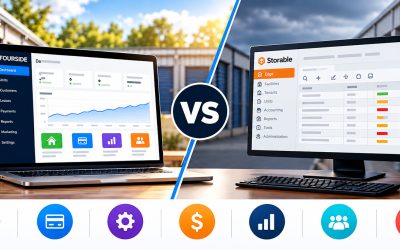
Fourside vs. Storable Edge: Which Self-Storage Management Software Is Right for You?
Fourside Solutions vs. Storable Edge: Which self-storage management software is right for your facility? Compare pricing, online rentals, payment processing, website integration, reporting, automation, and customer support. Discover how Fourside’s $1-per-unit pricing and flexible payment processing make it an attractive Storable Edge alternative.
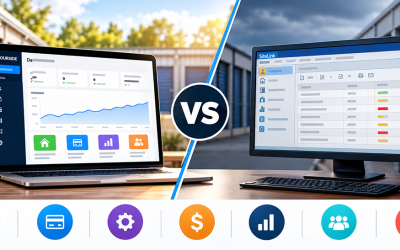
Fourside vs. SiteLink: Which Self-Storage Management Software Is Right for You?
Choosing between Fourside Solutions and SiteLink? Explore how these self-storage management platforms compare in pricing, online rentals, payment processing, website integration, reporting, and customer support. Discover why Fourside’s straightforward $1-per-unit pricing and integrated management tools make it an attractive alternative for storage operators looking to simplify operations and grow their business.

Why Fourside Solutions + Platinum Payments Is a Smarter Payment Processing Partnership for Self-Storage Operators
Discover how Fourside Solutions and Platinum Payments help self-storage operators reduce credit card processing costs, simplify merchant account setup, and improve payment management. With competitive processing rates, flexible agreements, and 24/7 support, this partnership offers a smarter approach to managing recurring rental payments and protecting facility revenue.